
The Cheerwine Problem
The FDA buried a six-year manufacturing error. Nobody cared.

My editor called the piece a “soft feature,” journalist-speak for filler, and I had been given it. I was to write 800 words about Red Dye #40, the artificial food coloring the FDA had just announced they’d start phasing out of some American foods. The focus was to be on nostalgia, a goodbye to that brightly colored, almost glowing red liquid in fruit punch, sports drinks, slushies from gas stations, and candy bright enough to act as a flashlight.
Apparently, America was expected to be sad about this.
I did all the writing for this article. I got a food scientist at Rutgers on the phone and, much to my surprise, she was really willing to discuss azo compounds (a lot of people are far more interested in the latest keto diet, you see). After that, I talked to a “wellness enthusiast” in Scottsdale who was entirely convinced that Red 40 was the reason her son was struggling with math. I’d guess Algebra II was the true problem, but I kept that opinion to myself, because a journalist likes to remain employed.
I sent in the article about six o’clock, had leftover chili, and went to bed.
My phone vibrated at 11:47 PM.
A number from my past.
Just three words: “Check the dye.”
That was enough to get me out of bed.
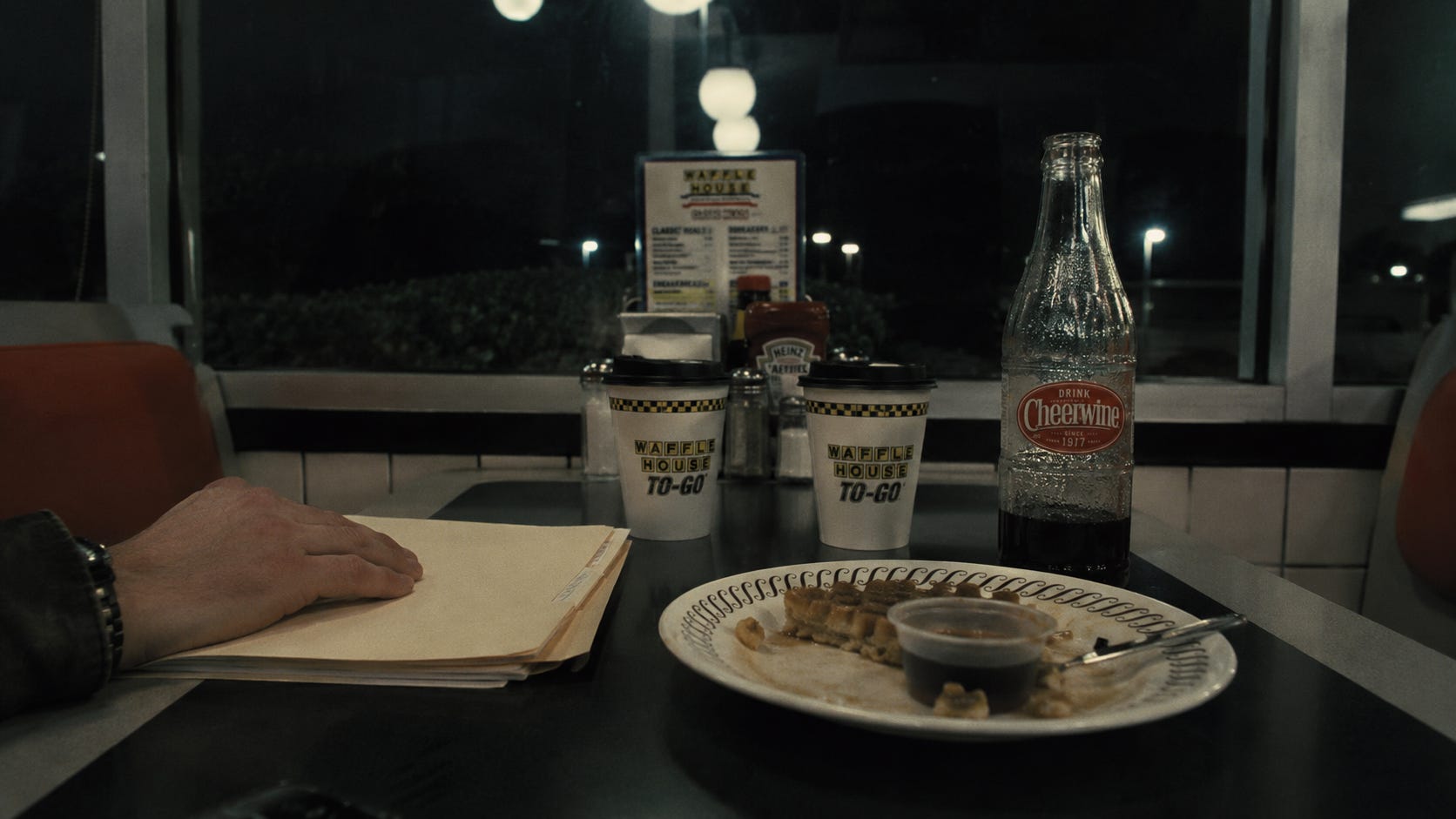
I hadn’t heard from her in ages, but I knew her from back when I was reporting on the baby formula that was found to be poisonous. That story got dropped by the news very rapidly, quickly being overshadowed by the details of a celebrity split on TMZ. She wouldn’t tell me anything in the texts, so we agreed to meet at a Waffle House by I-95 because she said, “nobody notices odd behavior in a Waffle House.”
And she was right. A loud disagreement about NASCAR was unfolding between two guys, Denise the waitress was continually having a smoke near the back door, and a man in a booth was fully passed out and holding onto his fork as if it’d deeply insulted him.
She pushed a simple brown folder to me across the table.
Old-fashioned. Like Deep Throat from All the President’s Men, but over breakfast and including a bit of information with it. The documents inside were photocopies of FDA memos, formal and bureaucratic with many abbreviations and those extremely long, thoughtfully constructed sentences typical of the government.
But “the Cheerwine Anomaly” showed up repeatedly.
Cheerwine, if you don’t know it, is a cherry soda from North Carolina. It’s a flavor of the past, a sugar explosion, something like two voices sharing confidential thoughts in a church parking lot. It is a very dark red, overwhelmingly sweet (sweet enough to make a hummingbird fall from the air), and Southerners are as fiercely loyal to it as New Yorkers are to pizza.
The memos were an internal FDA examination of continuing difficulties at the manufacturing plant between 1987 and 1993, and all of them involved the quantity of Red Dye #40 being used in the soda in certain locations.
For six years, the dye level wasn’t quite correct. It was a dangerous amount off.
But, in a good way.
People who drank a lot of these incorrectly mixed batches statistically were living longer.
This wasn’t something you’d find on an internet forum or hear as “my uncle lived to 102 from drinking soda!” It was real data, insurance information, mortality studies, and comparisons of different groups of people - the type of figures that can briefly halt an actuary’s blinking.
One memo described it as “an unusual increase in lifespan linked to higher levels of FD&C Red 40.”
Another said:
“Further testing is not recommended, pending review by multiple agencies.”
That phrase stuck with me.
Not recommended for further testing.
Not disproven, not ignored, not publicly investigated… simply, not recommended.
The FDA’s Center for Food Safety had a researcher who discovered this during some unrelated lifespan modeling. He spent four months trying to prove the numbers were wrong, and he couldn’t. The effect was still there.
People who drank a lot of Cheerwine made with the incorrectly mixed dye between 1987 and 1993 seemed to live longer.
I use ‘seemed’ on purpose. I really have to choose my words carefully. I’m absolutely not saying the government discovered Red Dye #40 unexpectedly made people live longer, and then hid that fact to benefit the drug companies. That’s a very big statement and would require substantial evidence. All I possess are copies of memos from someone who was afraid, given to at midnight over a pecan waffle.
However, the memos are real. The examination of the issue within the organization did take place, and the difficulty with its manufacturing is officially documented. I verified what I could by submitting a Freedom of Information Act request; it took fourteen months to get a single, thoroughly blacked-out page, plus a nice, but dismissive letter stating that they had investigated this on their own and weren’t keen on my curiosity.
Inside the FDA, as my informant said, this whole thing was referred to as “The Cheerwine Problem”. Nobody would say what that meant.
I got in touch with the agency about Red Dye #40 four times over three weeks, and each time they explained the results in a way that wasn’t really an explanation. It was carefully phrased to avoid saying anything direct, and sounded like a fax machine that had broken and then been taught how to speak in corporate legal language.
At the same time, my editor wasn’t happy with how the piece about memories felt. “Could you make it a bit more cozy?” he requested.
Cozy? I’d just spent a week going through internal documents - and one wrong decision in those documents would have been the subject of a Netflix documentary with a very serious, suspicious narrator.
The article was finally published on Thursday afternoon. 4,200 people read it. Seventeen people commented.
The majority of those comments were about Cheerwine. One man declared it the best soda ever, and warned anyone who would challenge that statement. A woman said her grandfather drank two a day and got to ninety-four, with no vitamins or exercise!
My editor gave me a ‘thumbs up’ on Slack and told me to write about seed oils.
The FDA didn’t say anything publicly. There weren’t even any hearings.
There weren’t any investigations into it.
Cable news just didn’t mention it at all.
Life continued as usual, as it does when something strange gets close to being real but doesn’t get in the way of people watching football.
I picked up a twelve-pack of Cheerwine at the gas station on the drive home.
Here’s how it’s being made now.
And this is the Red 40 they’re using.
Everything seemed normal.
At least, I think so.
I had one in the car, with the air conditioning blasting. It reminded me of cherries, past summers, gas stations down South, and a weird feeling that a document people really don’t want to talk about is hidden in a file somewhere in Maryland. I had another before bed. Didn’t stir once.
If this is the kind of writing you didn’t know you needed, follow the Proud Boomer Dispatch on Substack. Weekly newsletter, fiction, opinion essays. You can also follow Proud Boomer Wellness for health and fitness writing that takes the industry seriously so you don’t have to, or Florida Stories for Loretta Faye and other strange dispatches from my home state. Paid subscriptions run $8/month or $50/year. Full archive, one exclusive piece per month, zero sponsored content. Reach me directly at john@theProudBoomer.com.