

The Hell We Built
The furnace was assembled over centuries. Here is who built it, and what I believe now at 62.

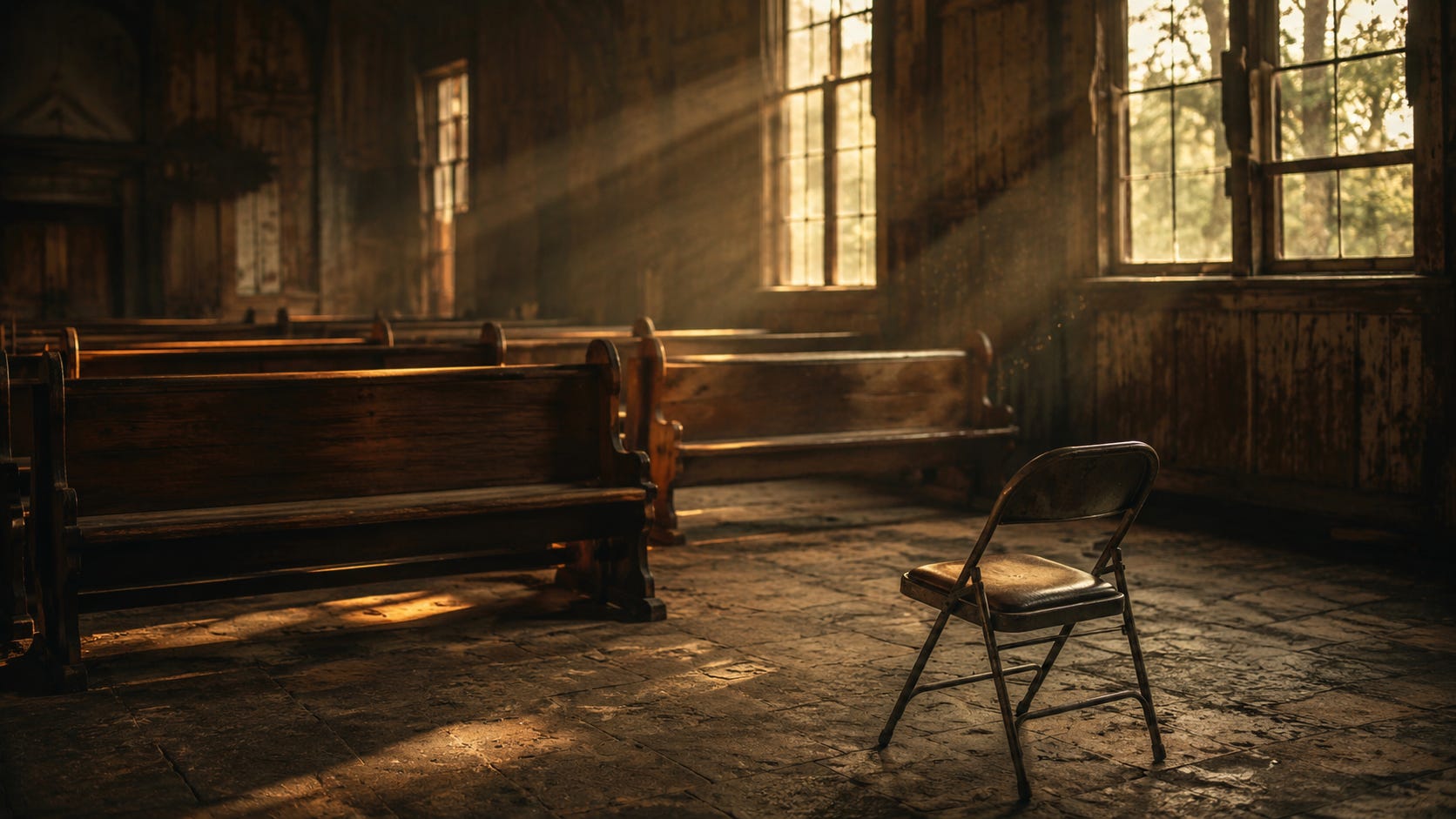
I was seven when somebody first described Hell to me.
It was CCD, a folding metal chair, a DeLand afternoon hot enough to fog the windows. The woman teaching us was kind in every other way. But when she got to Hell she leaned in, and the room went quiet, and I understood that this was the part that mattered. Fire that did not consume. Pain that did not end. A door that locked from the outside and stayed locked forever. I went home and lay in bed doing the math a child does, which is to say no math at all, just a long cold feeling in the stomach.
That feeling stuck around for years. It does its job. Fear usually does.
What I did not know then, and would not learn until I was a grown man reading instead of memorizing, is that the Hell she handed me was not one thing passed down whole. It was assembled. Built over centuries out of older parts, by people who were afraid of different things than she was, in places I will never see.
I came to that idea slowly, and a book pushed me the rest of the way. Alan Bernstein wrote a study called The Formation of Hell, and the title is the whole argument. Formation. Not revelation. Not a thunderclap. A formation, the way sediment forms, layer on layer, until you forget the layers and just call the whole thing rock.
Start with the Hebrew Bible, because that is where I assumed Hell lived. It does not. The word that gets translated into our furnace is usually Sheol, and Sheol is not a furnace at all. It is the grave. The pit. A gray, quiet, underground nowhere where the dead go and mostly just stop. The righteous go there. The wicked go there. The clever and the cruel and the kind all go to the same dim room and lie down together. There is no sorting at the door. Job complains about it. Ecclesiastes practically shrugs at it. Whatever Sheol is, it is not a place built to punish anybody.
Bernstein has a clean way of naming the shift that came later. He talks about neutral death and moral death. Neutral death is Sheol, everyone bound for the same fate no matter how they lived. Moral death is the newer idea, the one where the dead get separated, the good lifted up and the wicked held down and made to answer. Hell, the Hell I was taught, only makes sense in a world that has already decided death should keep score.
The Greeks had their underworld too, Hades, and when the Hebrew scriptures were translated into Greek the scholars reached for that word when they ran out of their own. Layer on layer. There is a deeper pit in the Greek imagination, Tartarus, where the worst offenders are chained, and you can feel the gears starting to turn toward something more like the place from my childhood.
Then there is Gehenna, which is the word Jesus actually uses in the Gospels, the one our Bibles flatten into “hell.” Gehenna was a real place. The Valley of Hinnom, just outside Jerusalem, a piece of ground with an ugly history in the older stories, a cursed and shameful place. When you point at a real valley everyone knows and say the wicked end up there, you are doing something different than describing a metaphysical basement. You are warning your neighbors with a landmark.
Pile on the apocalyptic writing that flourished between the testaments, all those visions of fire and judgment and sorted souls, then the Book of Revelation with its lake of fire, then centuries of preachers and painters and eventually a Florentine poet drawing maps of the place, and you arrive at my folding chair. The fire that does not consume. The locked door.
Here is what got me. Our one English word, hell, is doing the work of at least four different ideas that did not agree with each other. Sheol, Hades, Gehenna, Tartarus. We mashed them into a single syllable and then taught children the syllable was always there, fixed and final, straight from the mouth of God. It was not. It was made. People made it, the way people make everything, out of fear and grief and the deep need to believe the scales come out even in the end.
I want to be careful here, because this is the part where a younger and angrier version of me would have spiked the football. I am 62 now. I have buried people I loved. My mother died at 76. I have stood at enough gravesides to lose my appetite for cheap certainty in any direction, the smug believer’s and the smug atheist’s both.
So I keep coming back to the Stoics, to Marcus Aurelius, who never read a word of any of this and got somewhere useful anyway. His whole method was to live rightly because it was right, not because someone was keeping a ledger and pricing the penalties. Do the next correct thing. Be just. Be of use. Let the rest go. A man who lives that way does not need a furnace under his feet to keep him honest. And a man who only behaves because of the furnace was never really good to begin with. He was just afraid, and fear is not the same as character.
Which brings me to what I actually believe, after all the reading, sitting here with Gus asleep on my foot.
I believe the machinery of Hell was built by human hands, and I think realizing that is a relief, not a loss. But I am not ready to say nothing waits on the other side of the door. I believe in something I cannot map. And I believe, down to the floor of me, that a truly good person does not get thrown into a fire by the God who made them good. God knows your heart. That is the part the certain ones keep skipping.
Because I have met the certain ones. I have watched people wear their salvation like a badge and use it mostly to decide who else is going to burn. They have the door codes memorized, or think they do. They are louder about Hell than they are about love, and that ordering tells you everything. I worry far less for the doubters quietly trying to be decent than I do for the men holding the key and grinning.
I do not know what comes next. I have made my peace with not knowing. But if there is a sorting at the end, I will take my chances standing with the kind and the uncertain over the loud and the sure. That feels less like fear and more like faith.
The fire was never the point. Being good, while it costs you something, while nobody is watching and no one is keeping score, that was always the point.
If this is the kind of thing you want more of, the long thinking out loud, the questions I am too old to pretend I have answered, The Proud Boomer Dispatch is where I do it. Subscriptions run twenty dollars a month or eighty a year, and they keep the lights on so I can keep writing without selling you anything you do not need. And if it is the body and not the soul you are trying to keep out of the ground a little longer, my book Not Done Yet is on Amazon, a plain case for getting strong after fifty. Different fire. Same idea. Do the work while you still can.
Not Done Yet, on Amazon: https://amzn.to/4ed2Td6
Reference
Bernstein, Alan E. The Formation of Hell: Death and Retribution in the Ancient and Early Christian Worlds. Cornell University Press, 1993.
Thank you, so much wisdom. I have always thought that hell is a human construct, something to keep people in order. So many have their own hell in this life. I believe there’s something after, but we do the know what.
Good post John! I've also read the Bible cover to cover a few times coming to the same conclusions. Always fascinated by religion, philosophy, physics, anything that influences human behavior. I like that you took The time to analyze this word. I used to have a giant concordance for the Bible. Technology definitely makes stuff a lot easier lol