

The Old Hunger
Ten thousand years of hunger. One small room. One terrible mistake.

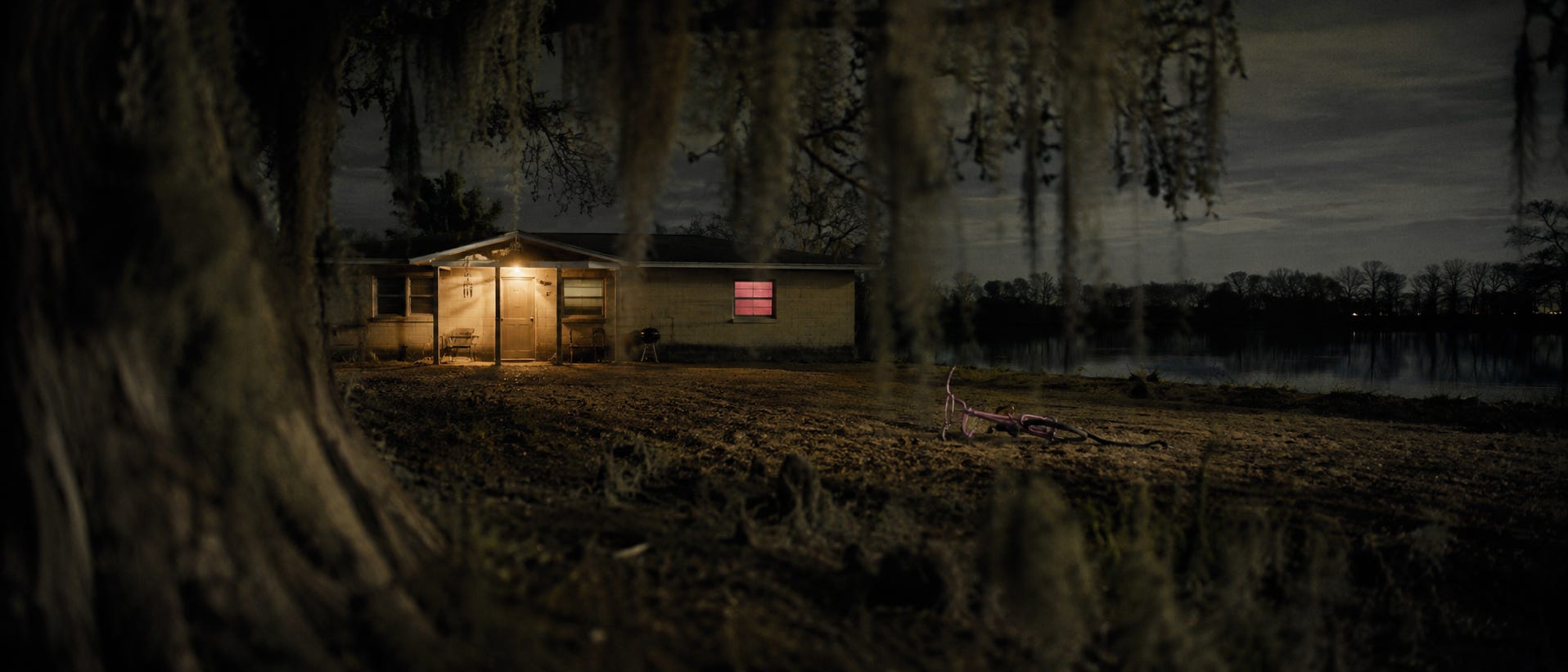
I have eaten ten thousand children.
I want you to understand that number the way a geologist understands strata—not as arithmetic, but as depth. As weight. As the accumulated pressure of everything buried. Ten thousand. Some in the years when men drew their gods in ochre on cave walls and left their children outside the fire’s reach on the coldest nights, offerings to whatever moved in the dark. Some in plague years, when the dying were so numerous that one more small body was simply the world continuing its argument. Some recently. The world has changed in the particulars -- the clothes, the language, the particular smell of fear which has grown synthetic as the centuries piled on -- but the children have not changed. They are always the same inside. That is the one constant this universe has offered me, and I have accepted it with something that might, in a lesser creature, be called gratitude.
I do not hunger the way you hunger. Yours is a small mechanical thing, a signal from body to brain, manageable and almost charming in its modesty. Mine is geological. Mine is the pressure that builds in the earth before the plates shift and cities fall. When it rises in me, I become the hunger and everything else—what passes in me for thought, for memory, for the approximation of a self—recedes like water pulling back from shore before a wave.
The hunger brought me to Collier County on a Monday in August.
I came up from the ground near a stand of cypress trees at the edge of a property that backed against a retention pond the color of old pewter. The air was swollen with heat, the kind that has mass, that pushes back against the body like a living thing. Spanish moss hung in wet curtains from the cypress limbs. Somewhere in the distance a highway hummed its constant prayer. I stood in the dark at the tree line and looked at the house.
It was a modest thing. Single story, concrete block construction, the particular shade of beige that suggests not a color choice but an absence of one. A child’s bicycle lay on its side in the yard, pink and chrome, a plastic basket on the handlebars containing three small rocks and a length of ribbon the color of a fresh bruise. The porch light was on. It backlit the hanging plants and the two white rocking chairs and a wind chime made of bones—I took it for driftwood until I drew closer and the smell reached me.
The hunger knew before the rest of me did.
There was a child inside.
I can describe what I become in those moments the way a blind man describes color—functionally, with certainty, but without the image. My body, such as it is, unfolded. There is no better word. Things inside me that have no name in any human language arranged themselves for a purpose. My mouth, which in repose is merely a seam in the architecture of my face, began to open in the way a flower opens, if the flower were designed by something that understood appetite but had never witnessed beauty. The teeth—I have so many teeth, arranged in configurations that defy the geometry of any jaw you have known—emerged wet and iridescent, each one carrying its own small luminescence in the dark.
I moved across the yard.
The bicycle. The rocks in the basket. The ribbon.
A child’s curation. A small intelligence at work, deciding what was worth keeping.
It meant nothing to me. The hunger had me fully now.
She was awake.
That was the first thing. Children are almost never awake when I arrive. I carry something with me that reaches through walls and into sleeping minds the way gas fills a room—gradual, total, and undetectable until it is already too late to matter. The children sleep more deeply when I am near. They dream of warm things. Of mothers. Of the particular weight of a beloved animal settling against their legs in the dark. They do not wake.
She was sitting up in the bed.
The room was everything the house promised and nothing more—pink curtains, a shelf of stuffed animals ranked by size, and a nightlight shaped like a crescent moon that threw the room’s shadows into soft relief. She was perhaps five years old. Her hair was the pale blonde of winter grass, her eyes the particular blue that appears in the hottest part of a flame, and she was watching the window.
Watching the window in the way you watch something you have been expecting.
“I know you’re there,” she said.
Her voice was a child’s voice. Every frequency correct. Every inflection carrying the particular music of the not-yet-ruined. I have heard that voice ten thousand times. I have heard it beg, which is the sound I move toward the way water moves downhill, helpless and absolute.
This child was not begging.
I came through the wall the way I come through walls—the world is mostly empty space, and I know the spaces well, have known them since before this continent had a name, since before the sea decided where the land should end. I stood in the room.
She looked at me.
Not at the space where I was. Not in my general direction. At me. At the specific architecture of what I am, which no human eye should be able to resolve, which the human brain is wired to refuse and reroute into something manageable, something explicable, a shadow, a draft, a shape in the peripheral dark that the next morning will be a coat hung on a door.
She saw me clearly.
“You’re old,” she said. “Even for one of yours.”
The hunger did not retreat. The hunger never retreats. But something else began—a secondary awareness, cold and precise, moving up through the geological layers of my appetite like a seam of quartz through limestone. Something that had learned, across ten thousand meals, to recognize anomaly.
“Come sit down,” she said. She patted the mattress beside her.
I did not sit. But I did not move forward.
The ribbon on the bicycle. The color of a bruise.
The bones of the wind chime.
I have been hunting since before your gods had names. I know what bait looks like—I have never needed to use it, have never been in a position requiring deception, have simply arrived and fed and departed, and the world continued without noticing anything more than a slight chill where I had been. I know bait the way you know the smell of rain. From the inside of the memory. From the oldest part of whatever I am.
I looked at her room again.
The shelf of soft animals ranked by size. The crescent moon nightlight. The pink curtains.
All of it correct. All of it exact. The way a stage is set correct. The way a trap is correct, in all its visible dimensions, and the only wrong thing is the spring you cannot see until the mechanism fires.
“They all come in thinking the same thing,” she said. Her voice had not changed. Still the music of the not-yet-ruined. But her eyes—those burning-blue eyes—had something moving behind them that had no childhood in it. Something with depth. “They smell something they’ve smelled before and they stop thinking. The old ones are the best. You carry so much. There’s so much to take.”
My mouth was still open. My teeth still luminous in the soft dark.
She smiled.
It was a child’s smile. It was nothing like a child’s smile.
“I’ve been doing this longer than you have,” she said.
The nightlight went out.
I do not know what she is.
I know what I am—the oldest hunger, the thing before fire, the patient dark that waited at the edge of every light our species ever made. I know my nature the way stone knows its own weight.
I do not know what she is, and that is a sentence I have never before been in a position to construct. Novelty, after ten thousand years, is not a comfort.
What I can tell you is this:
The bicycle is still in the yard. The ribbon is still in the basket. The house still sits at the edge of the retention pond, the porch light on, the bone chime turning in whatever wind finds it. Somewhere on that shelf, if you were to go inside and look, you would find one more soft animal than was there before. Ranked by size. Fitted into the sequence as if it had always been there.
And somewhere in that room, if the night is right and the hunger drives you to it, a small girl with winter-grass hair and flame-blue eyes is sitting up in bed.
Waiting.
She has been waiting a very long time.
The Proud Boomer Dispatch publishes fiction, horror, and essays for people who read with the lights on and keep reading anyway. If this story landed, consider supporting the work at ko-fi.com/theproudboomer. More is coming.
I really like this story. I feel like there is more to be written about this "child".
“I’ve been doing this longer than you have,” she said.” 😱I was too tired to read this story before bed…thank God! Your descriptive writing and imagery are like no other.